Start from the load, not the technology
Cooling is a response to heat, and heat is set by how much power each rack draws. Before comparing systems, agree the rack load you need today, the load you expect in three to five years, and how uneven it will be across the room.
Air cooling with containment
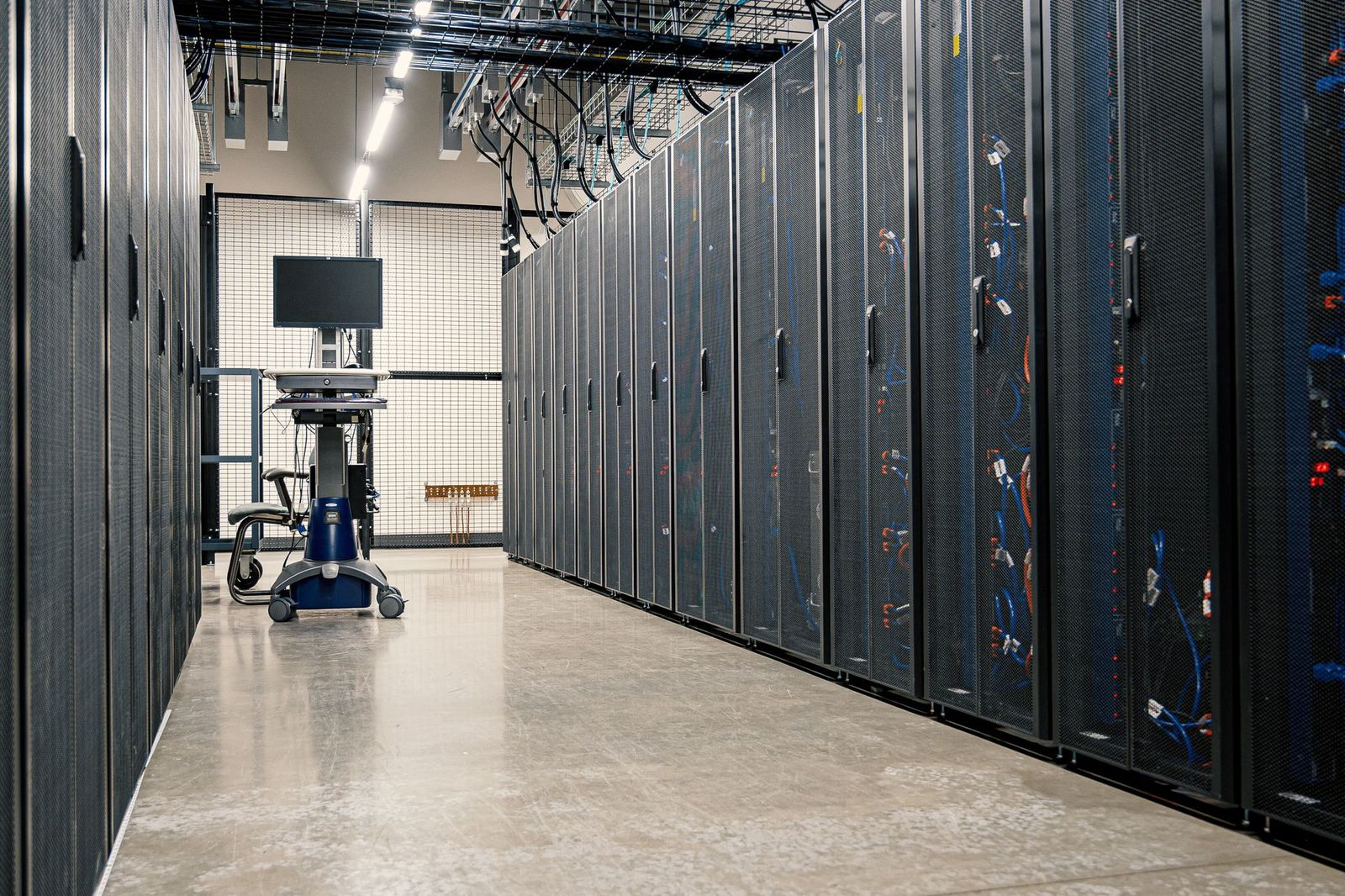
For moderate rack densities, well-managed air cooling is usually the simplest and most economical choice. The key is to stop hot and cold air from mixing: aisle containment, blanking panels, sealed cable openings and correct perforated-tile placement often recover more capacity than adding cooling units.
Rear-door heat exchangers and liquid cooling
As a rule of thumb, racks beyond roughly 15 to 20 kW start to strain room-level air cooling. Rear-door heat exchangers remove heat at the rack and can be added to an air-cooled room. Direct-to-chip liquid cooling goes further and is increasingly common for dense compute. Both need water-side design, leak detection and a clear maintenance plan.
Plan for the UAE climate
High outdoor temperatures and humidity reduce the hours in which free cooling helps, and they raise the cost of heat rejection. Ask for the design to be modelled at your site's peak conditions, not an average year, and for water use to be stated alongside energy use.
Questions to ask before you commit
- What rack density is each hall designed for, and what happens when one rack exceeds it?
- How does the design behave at peak summer temperature with one cooling unit out of service?
- Where is the water, and how is a leak detected and isolated?
- How will cooling capacity be monitored and commissioned under load?
Key points
- Size cooling to the rack load you actually expect.
- Containment is the cheapest capacity you can buy.
- Dense racks need rear-door or liquid cooling, designed with leak detection.
- Test the design at peak local conditions.
Draft article for technical and editorial review before publication.